
Hair Removal Education
Laser Hair Reduction for PCOS: Can It Really Help Unwanted Hair Growth?
If you live with PCOS, unwanted hair growth is rarely a small thing. It is the extra ten minutes before work, the mirror check in the car, the tweezers that live in every bag. Many of our clients have been managing it quietly for years before they ever ask us about laser.
So here is the honest answer to the question in the title. Laser hair reduction can make a meaningful difference to PCOS-related hair growth for a lot of people. What it will not do is switch the growth off for good, because the hormones prompting that growth are still doing their work.
Knowing the difference between those two things is what makes the treatment worth it. At Vanilla Sugar Face & Body in Peoria, IL, we would rather set that expectation on day one than have you feel let down at session four.

Why PCOS Leads to Unwanted Hair Growth
Polycystic ovary syndrome is a hormonal condition, and one of its common effects is a higher level of androgens. Androgens influence hair follicles, and in certain areas of the body they can turn fine, barely visible hair into coarser, darker, more stubborn hair.
That is why PCOS hair tends to appear in a recognizable pattern: the chin and jawline, the upper lip, the sides of the face, the neck, the chest and the lower abdomen.
It is also why it keeps coming back after shaving or waxing. The follicle is being encouraged to grow, over and over.
How PCOS Affects Hair Growth
Laser hair reduction can make a meaningful difference—but it does not switch hormonal hair growth off for good.
Can Laser Hair Reduction Really Help?
Yes, for many people it can, and here is what actually happens during a treatment. The laser sends light energy toward the pigment in the hair, and that energy travels down and damages the follicle it came from. A damaged follicle produces less hair, or finer hair, or in some cases no hair at all.
The catch is timing. Only a portion of your follicles are in an active growth phase at any given moment, and those are the only ones the laser can affect. Everything else is resting and simply will not respond that day. This is why treatment happens in a series spaced weeks apart rather than in one long appointment.
How Laser Hair Reduction Works
Why Multiple Sessions Are Necessary
Treatments are spaced several weeks apart so each session catches a new set of follicles in the active phase.
Why We Say “Reduction,” Not “Removal”
Across a full series most clients see a significant drop in how much hair grows back and how noticeable it is. Complete, permanent removal is not something we promise to anyone, and with PCOS in the picture it is even less realistic.
ReductionnotRemoval
- ✓Less noticeable regrowth
- ✓Finer regrowth
- ✓Longer time between hair-removal sessions
- ✗Not promised
What Laser Hair Reduction Can and Cannot Do
An honest look at treating PCOS-related hair growth
What It Can Do · Realistic
- ✓Reduce how much hair grows back over a series of sessions
- ✓Soften regrowth so it comes in finer and lighter
- ✓Stretch the time between shaving, tweezing and waxing
- ✓Ease the daily upkeep that PCOS hair so often demands
What It Cannot Do · Worth Knowing
- ✗Treat PCOS itself, which stays with your physician
- ✗Stop hormones from prompting new follicles
- ✗Remove every hair permanently in one course
- ✗Replace maintenance sessions once the series is complete
What Makes PCOS Hair Different
The Hormonal Signal Does Not Stop
With hair that is not hormonally driven, a completed series often holds well for a long stretch. With PCOS, the same hormones that recruited those follicles in the first place can recruit new ones, so some regrowth over time is normal rather than a sign that the treatment failed.
The Face Is the Most Persistent Area
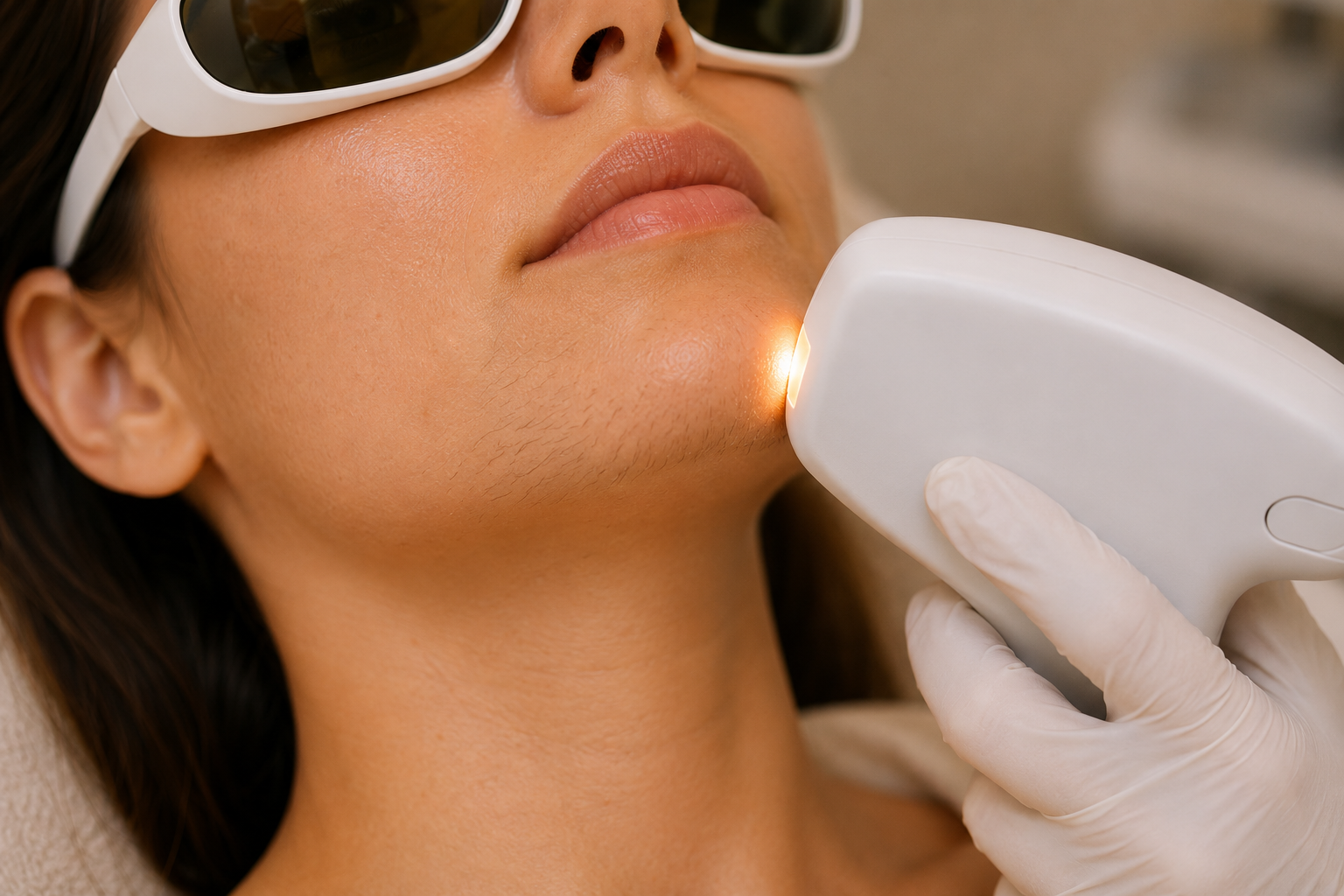
Facial hair responds quickly to laser and is often the most satisfying area to treat, but the chin and upper lip are also the areas most likely to see hormonal regrowth. Many clients complete their laser series and then keep things tidy with occasional maintenance sessions or a quick wax between visits.
Treatment Plan & Maintenance
What a Realistic Treatment Plan Looks Like
Sessions spaced several weeks apart
Six sessions is the typical starting point, and hormonally driven hair often needs more than that. Sessions are spaced several weeks apart so each one catches a fresh set of follicles in their growth phase. Results build gradually across the series rather than arriving all at once.
Maintenance Is Part of the Plan
Rather than thinking of laser as a one-time purchase, think of it as reducing the workload permanently and then keeping it there. Most PCOS clients settle into occasional touch-up sessions, and describe the upkeep afterward as a fraction of what it used to be.
Patience in the First Few Weeks
It usually takes two to three weeks after a session before you see the treated hair shed, and considerably longer to judge the full effect. Booking a series and giving it time is far more useful than assessing your results the morning after your first appointment.

Is It Comfortable, and Is It Safe for My Skin Tone?
Most clients describe the sensation as a gentle warming on the skin.
Our Moxie AD+ platform with Moveo technology is uniquely suitable across a wide range of skin tones.
When you come in for your consultation, we will talk through any concerns and tailor settings to you.
How to Prepare for Your Appointment
Shave the area 24 hours before your appointment.
Avoid sun exposure and tanning beds.
Come with clean skin. No lotion, oil, deodorant or makeup on the area.
Tell us about any medications or supplements you're taking.
Let us know about any recent changes to your PCOS treatment or hormones.
For detailed preparation instructions, visit our Laser FAQs page.
Laser Is Not a Replacement for Medical Care
Laser treats the hair. A physician manages the underlying hormonal condition. PCOS is a medical condition that deserves ongoing care. We are proud to support your confidence on the surface while your medical team supports your health beneath the surface.

Common Questions
Will laser hair reduction work if my PCOS is not under control?
It can still reduce hair and make a big difference in manageability. However, if PCOS remains untreated, the hormones driving new growth stay active, so more regrowth over time is likely and ongoing maintenance sessions become even more important.
How many sessions will I need?
Six is a typical starting series, but hormonally driven hair from PCOS often needs additional sessions and periodic maintenance afterward to keep results in place.
Can laser hair reduction help balance my hormones?
No. Laser addresses the hair itself, not the hormonal condition behind it. Managing PCOS is best handled alongside your physician.
Is laser hair reduction safe for darker skin tones?
Our Moxie AD+ platform with Moveo technology is designed to work safely across a wide range of skin tones. We'll confirm suitability during your consultation.
Will the hair come back after my series is complete?
Some regrowth over time is normal with PCOS, since the same hormones that recruited the original follicles can recruit new ones. Occasional maintenance sessions help keep it in check.
Does treatment hurt?
Most clients describe it as a gentle warming sensation rather than pain. We'll always tailor settings to your comfort during your consultation.
Talk to Us About Your Hair Growth in Peoria
Every PCOS journey looks a little different. Book a consultation and we'll help you understand what a realistic laser hair reduction plan looks like for you.
